Product managers often focus on features, timelines, and user outcomes. These are critical responsibilities. But understanding how systems actually work is just as important.
Without system design knowledge, it becomes harder to plan scalable features, align with engineering teams, or anticipate infrastructure trade-offs.
In this blog, we break down the essentials of system design for product managers. This guide covers the basics every PM should know. You will learn key concepts, roles in design discussions, and how to bring technical awareness to your product work.
What does system design mean for product managers?
System design is the process of planning how a software system will be built. It involves defining and choosing architectural patterns and organizing how services interact. Engineers use system design to make decisions about performance, reliability, and scalability.
For product managers, system design is not about writing code. It is about understanding how the system will work and how that system impacts product behavior. This understanding helps PMs speak the same language as engineers and think ahead about trade-offs and risks.
System design for product managers is about awareness. It helps PMs become stronger partners in technical conversations.
Why product managers need to understand system design
Product managers act as the link between business needs and engineering execution. When a PM understands system design, they can ask better questions, write more precise requirements, and prioritize more effectively.
Several areas benefit directly from this understanding:
- Estimating timelines based on technical scope
- Spotting risky features before development begins
- Communicating limitations to stakeholders
- Planning for scale during product growth
- Reducing misalignment between product and engineering
Learning system design for product managers helps reduce ambiguity. It also builds trust with engineers and creates space for stronger collaboration.
PMs do not need to master all technical details. They need to know enough to support conversations that lead to sound product architecture.
The product manager’s role in system design meetings
System design meetings are where engineers plan the structure of a new feature or service. They make decisions about how the core components will interact, where data will be stored, and how the system will handle traffic, failures, and updates. These meetings shape how the product works behind the scenes.
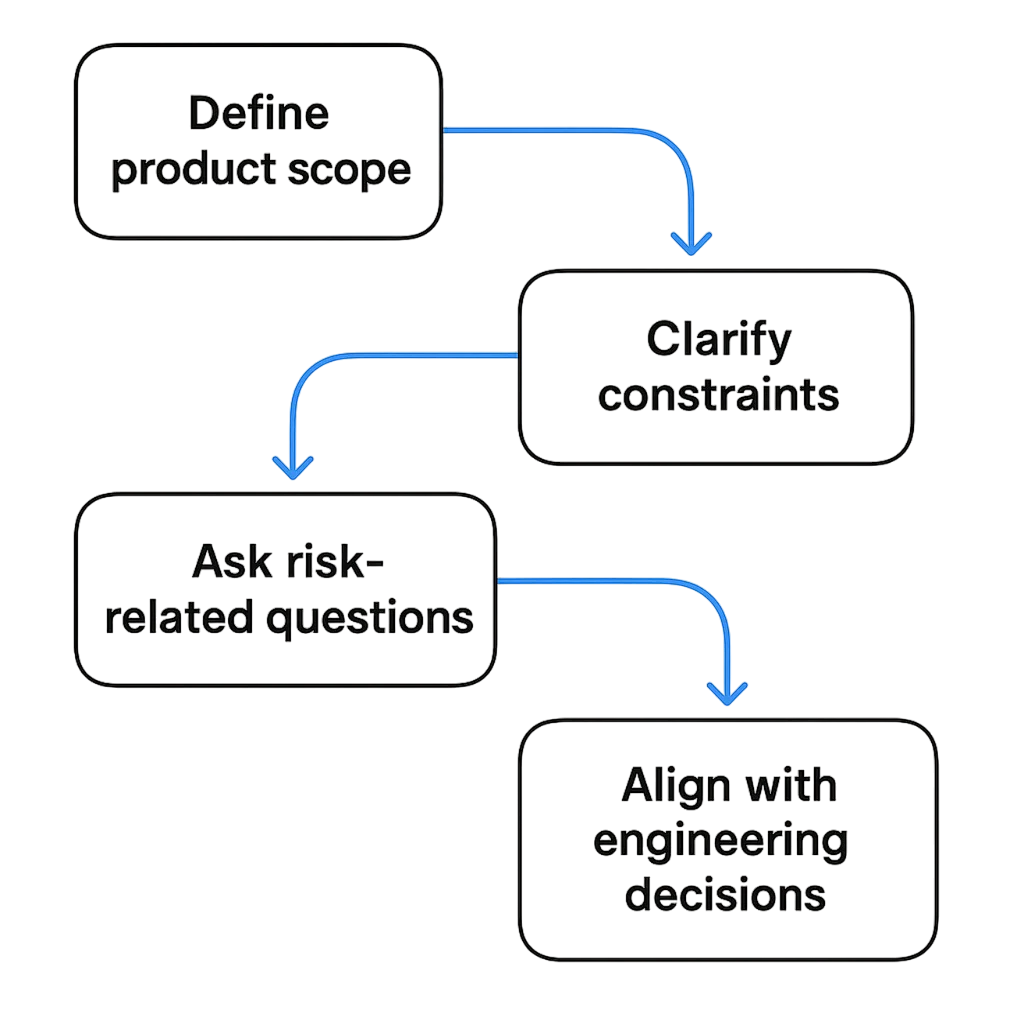
System design for product managers is about participating in these conversations with purpose. PMs do not need to dictate architecture. They support decision-making by providing context, setting constraints, and clarifying goals.
Define product scope clearly
A system cannot be designed correctly without knowing what it needs to achieve. PMs must come prepared with well-documented requirements, including user stories, edge cases, and business rules. If a feature has a high user impact or regulatory constraint, engineers need that information before starting design.
Translate user goals into technical clarity
System design meetings often include questions like: What happens when a request fails? What is the expected response time? How often will this API be called? PMs who understand these concerns can help answer them by connecting product expectations with operational needs.
Set priorities for trade-offs
Not every feature can be perfect in speed, cost, and reliability. Engineers must make trade-offs. PMs help guide those trade-offs by stating what matters most to the user. Is it more important that the system is fast or that the data is always accurate? These insights strengthen the design.
System design for product managers involves active listening, asking focused questions, and offering the right input at the right time. When PMs contribute in this way, they become trusted partners in shaping resilient and scalable systems.
Core system design concepts for product managers
Product managers are not expected to build systems. They are expected to lead product strategy. A solid understanding of core technical concepts helps PMs connect ideas with the technical reality behind them, improving collaboration and product outcomes.
System design for product managers begins with learning a few core principles. These concepts apply across many features and architectures. They are foundational to making informed product decisions.
System boundaries and components
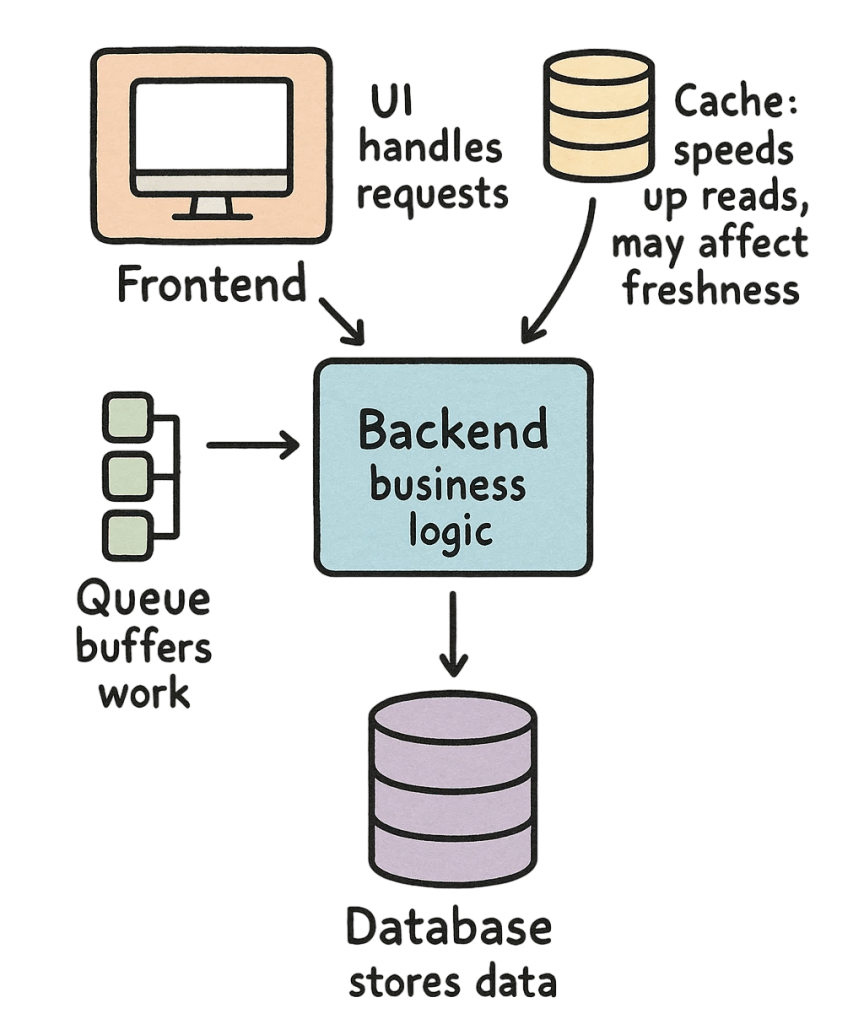
Every system consists of multiple services or modules, each with a clear responsibility. Product managers should understand how data flows between these services. This knowledge helps in mapping dependencies and estimating scope.
Latency, reliability, and response time
Some systems respond instantly. Others rely on multiple services, each introducing delay. PMs should understand what causes slow response times and how reliability is measured. If the product depends on real-time updates, these concepts are critical.
Caching and data freshness
Many systems use caching to improve performance. This means the data shown to users might be delayed by a few seconds or more. PMs should know where caching occurs and how it impacts the user experience. This helps them set realistic expectations and write better acceptance criteria.
Queues and asynchronous processing
Some systems process work in the background. For example, uploading a large file or sending an email may not happen instantly. Product managers should understand when asynchronous flows are used. This helps explain delays or sequencing in the user interface.
Horizontal scaling and load handling
As a product grows, it must support more users. Engineers handle this by adding more servers or containers. PMs should understand horizontal scaling and when it matters. This helps them plan for growth and understand the cost implications.
By learning these concepts, product managers can follow system design conversations without confusion and contribute to smarter planning. System design for product managers is about gaining enough technical fluency to guide product decisions with confidence.
How system design improves product decision-making
System design is not just an engineering concern. It directly affects how the product behaves, how fast it evolves, and how reliably it serves users. When product managers understand system design, they make better decisions and reduce development friction.
System design for product managers improves decision-making in multiple ways. Each benefit supports clearer planning, more realistic roadmaps, and stronger collaboration.
Accurate estimates and better scoping
Engineers estimate timelines based on technical complexity. PMs who understand the system’s structure can anticipate when a feature is simple or complex. If a new feature needs a new database table, that is one level of effort. If it needs a new microservice, that is another. PMs who recognize this difference can help build more accurate delivery plans.
Smarter prioritization and backlog grooming
Not every feature has equal technical weight. A small front-end change may require a deep back-end rewrite. PMs who understand system internals can prioritize tasks based on impact and cost. This prevents delays and supports a healthier balance between product goals and engineering feasibility.
Better planning for edge cases and failures
Every system can fail. Networks break, APIs time out, and background jobs crash. Product managers who understand failure modes can plan for them. They can define fallback behaviors and write user stories that consider retry flows, empty states, or degraded performance. These plans reduce last-minute stress and improve overall quality.
Improved communication with stakeholders
When system design affects product behavior, PMs must explain it to stakeholders, who may include marketing, legal, customer support, or leadership. A PM with system design knowledge can translate technical decisions into product impact, improving alignment and reducing confusion.
Long-term planning and technical sustainability
Short-term wins often create long-term debt. PMs who understand system design can see which features may create architectural pressure. They can include refactoring in roadmaps and plan for future needs. This prevents fire drills and supports sustainable growth.
Understanding system design for product managers is not optional. It is part of being an effective cross-functional leader. It brings clarity to your planning and trust to your partnerships with engineering.
Getting started with system design for product managers
You do not need a computer science degree to start learning system design. You can start by reading system design blogs, watching explainer videos, or joining internal architecture sessions.
Here is a simple path to get started:
- Study basic architecture diagrams used by your team
- Join one design review session per sprint
- Ask engineers to walk you through key design decisions
- Read case studies from engineering blogs
- Learn the language of queues, load balancers, services, and APIs
Each of these steps builds confidence. Over time, your product work becomes stronger because it is backed by a better understanding of how systems actually work.
System design for product managers is not just about knowledge. It is about becoming a more informed and reliable partner to engineering teams. You can also use these learning resources to strengthen your understanding of system design: